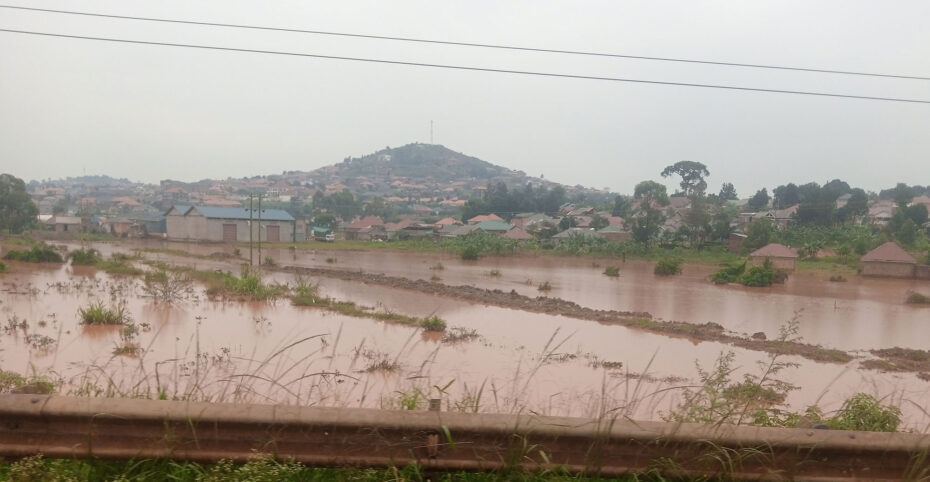
Summary: The Nationally Determined Contributions (NDC) is the communication of the national commitment regarding the country’s contribution in writing towards reducing global temperature by lowering emissions.
By EPHRAIM KASOZI
Arrangements have been finalized by the government through the Ministry of Water and Environment to develop and renew Climate Action plans to curb disasters resulting from destruction of natural resources.
The government plan dubbed Nationally Determined Contributions (NDC) 3.0 presents what the country undertakes to contribute to the global goal of lowering temperatures by reducing emissions.
Environment experts say that the NDC under development is part of the communication of the national commitment Uganda’s contribution in writing towards reducing global temperature by lowering our emissions.
Muhammad Ssemambo, the Assistant Commissioner in charge of Climate Change and Carbon Trade at the Ministry of Water and Environment said that the NDC under development targets reducing GreenHouse Gas emissions from the energy sector and a plan on adaptation in terms of what can be done to increase coping with the impact of climate change and also adapt to the negative impact of climate change as we build resilience.
The commitment, Ssemambo said , seeks to facilitate the business of carbon trading; “because for you to participate in carbon trading, you must have an NDC which communicates the technology that you are going to implement to reduce emissions.”
“What is it that we want to reduce in terms of reducing emissions from the transport sector; from the waste sector and the agricultural sector? Looking at crops and livestock, the last one is from the industry sector. There are several interventions like in the energy sector, how do we increase efficiency in energy in terms of transport, in terms of cooking instead of using the three stones for cooking, is there technology we can use to prepare meals without creating more emissions, without degrading more of the environment?” he said.
Ssemambo made the remarks at the just concluded regional consultative conference on the draft NDC organized by the Ministry of Water and Environment jointly with Environmental Management for Livelihood Improvement Bwaise Facility (EMLI) and World Wide Fund for Nature (WWF) with support from United Nations Development Programme (UNDP) organized the consultative meeting to gather input of stakeholders to ensure that they are comfortable with the commitments.
“What is it that we want to mitigate in terms of reducing emissions from the transport sector; from the waste sector and the other is the agricultural sector? Looking at crops and livestock and the last one is from the industry sector,” Ssemambo said.
According to Ssemambo, there are several interventions like how do we increase efficiency in energy in terms of transport, in cooking instead of using the three stone cook stove, is there technology we can use to prepare meals without creating more emissions, without degrading more of the environment.
Sarah Mujabi, the UNDP Resident Representative said that the NDC would articulate the national priorities that should guide investments, partnerships, and interventions aimed at strengthening resilience, supporting adaptation, and advancing climate change mitigation efforts throughout this decade.
She said that UNDP has been and remains committed to supporting the Uganda government in efforts to achieve national resilience.
Over the years, UNDP have collaborated on ecosystem restoration, expanding access to renewable energy, rehabilitating degraded forests and rangelands, and protecting critical biodiversity which interventions have contributed significantly to sustainable development and climate action across the country.
Mujabi said that despite the achievements, many Ugandan communities remain highly vulnerable to the impacts of climate change.
“This reality suggests that the scale and pace of adaptation actions have not yet been sufficient to build the level of resilience required to withstand increasing climate-related shocks and stresses. It also challenges us to reflect on whether the low-carbon technologies and approaches deployed so far are adequately responding to local needs and circumstances. So raising ambition has now to be moved into implementation,” she advised.
The government through the Ministry of Water and Environment jointly with EMLI and World Wide Fund for Nature (WWF) with support from UNDP is currently consulting different stakeholders through meetings to gather peoples’ views and input to ensure that they are comfortable with the commitments.
The meeting sought to concretise on the regional consultations that are going to help in finalizing the national commitment to the Paris Agreement.
The Paris Agreement is an international treaty that is looking into or compelling countries to reduce GreenHouse Gases to curb down an increase in temperature.
The Treaty states that countries have to adapt to the changing Climate conditions, so for us to do that, parties to the Paris Agreement demonstrate the commitment to reducing or contributing to the global causes of climate change.